






Wes Anderson is as crazy as a MR. FOX
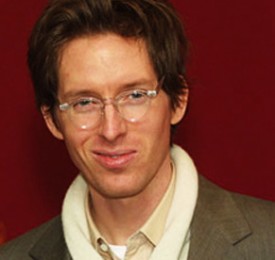 Wes Anderson, the director of Bottle Rocket (1996), the classic Rushmore (1998) and The Darjeeling Limited (2007), will helm the Fox Animation production based on the Roald Dahl novella The Fantastic Mr. Fox. The script has been adapted by Anderson and Noah Baumbach (Kicking and Screaming, 1995, The Squid and the Whale, 2005), who both collaborated on the screenplay of Anderson’s own The Life Aquatic with Steve Zissou (2004) — “I’ve never seen a bond company stooge stick his neck out like that.”
The stop-motion animated film will closely observe the character designs of the illustrations by Donald Chaffin for the book released in 1970. Class act Scott Rudin, who has produced Mother (1996), The Truman Show (1998), The Hours (2002), and No Country for Old Men (2007) among others, will overlook the production.
When asked about the animation in the film, Wes Anderson responded that “(it’s) like The Nightmare Before Christmas (and) those (Jules Bass and Arthur Rankin Jr. produced) Christmas specials. These [characters] have fur, so it’s not like claymation (like Nick Park’s Wallace and Gromit). The settings will be very natural. We want to use real trees and real sand, but it’s all miniature.”
That’s fantastic news when one remembers those strange and beautiful sea creatures that were rendered with stop-motion by animation director Henry Selick (James and the Giant Peach, 1996) for Life Aquatic. Selick was set to co-direct with Anderson in The Fantastic Mr. Fox, but left to pursue the direction of Neil Gaiman’s Caroline. Replacing Selick is Mark Gustafson, who has had extensive experience with stop-motion animation in short, experimental films.
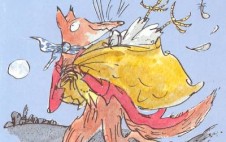 The Roald Dahl tale is about a wily fox who outwits a group of farmers out of their produce. Just imagine Max Fischer with orange fur and a tail. Mr. Fox will be voiced by the equally wily George Clooney. There is confirmation that Wes Anderson alumni such as Cate Blanchett, Jason Schwartzman, Bill Murray (sound the trumpets!), and Anjelica Huston will lend their vocal talents as well.
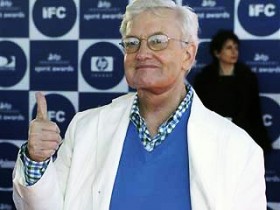 One of the new special features for the upcoming Director’s Cut DVD of Alex Proyas’ Dark City (1998) due on July 29th, 2008 is a brand new audio commentary track by Roger Ebert. Whether he recorded at the same time before the first DVD was released on July 1998 or sometime again before 2005 when Ebert had surgery on his salivary gland. The operation was botched when his carotid artery burst, leaving him in intensive care for over a year, and costing him his ability to speak.
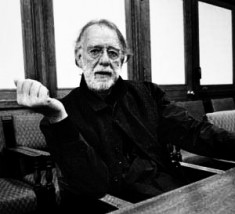 Reggio’s Qatsi Trilogy and Animi Mundi present moving imagery of landscapes from around the world that are manipulated by time-lapse techniques set to unique scores by Philip Glass. Savage Eden is a bit different, being described as a film that combines “narrative and non-narrative cinema”. Much like Reggio’s previous works, it will mostly be devoid of plot and characters. Reggio vaguely elaborates on the title during an interview with
 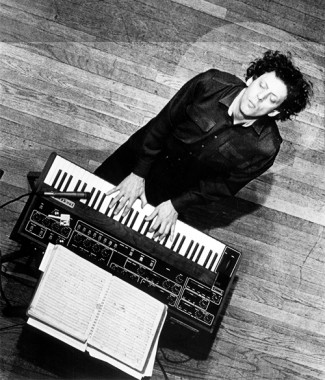 Glass: A Portrait of Philip in Twelve Parts is a new documentary about one of the greatest living composers from the last century, is in limited release now. The film, set for release at the Toronto Film Festival in 2007, marks Philip Glass’ 70th year. Scott Hicks, the director of Shine (1996 — one of the best films of the 1990s), has jumped at the chance to document Glass for a year while collaborating on music for his film No Reservations (2007). Hicks had been granted access behind the curtains and inside Glass’ home to present the artist more intimately. The documentary presents twelve different aspects of Glass, much like François Girard did for Thirty Two Short Films About Glenn Gould (1993), a fictional account of the eccentric Canadian classical pianist who died in 1982. The Girard film was also one of the very best films of 1994.