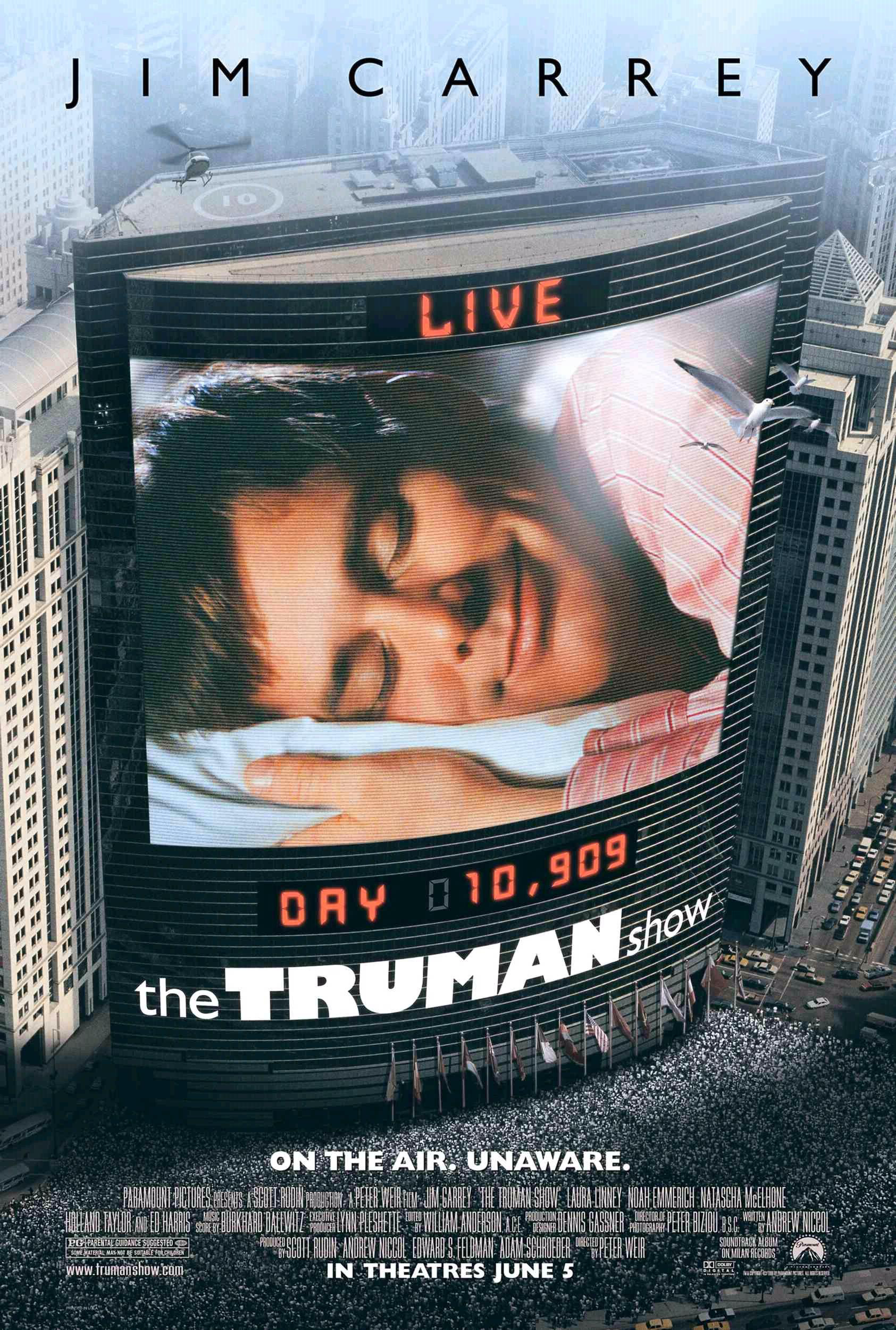









Introduction to THE TRUMAN SHOW (1998) Featured At The VIFF Centre’s “90s, Baby!” Series
Alrighty then!
How’s everyone enjoying the “90s, Baby!” series? I’ve been looking forward to this summer-long event for years after the VIFF Centre presented the seasonal retrospectives of the American movies from the 70s and 80s. I haven’t had this much fun since the Summer of Brian De Palma a decade ago. Tonight I am incredibly honoured to be presenting “The Truman Show” (1998).
Its director, Peter Weir, is a brilliant filmmaker. Lyrical, bold, soul-searching, and a romantic. Weir is most passionate about adventurers and the mysterious forces that conspire against them. The moving image, his acute sensitivity to its poetry is matched by his love of the soundtrack – he always carries a boombox on set and is all the ready with stories and ideas to inspire the crew. When he received his an Honorary Oscar Award for Lifetime Achievement, Weir said that he considers the actors usually separated as “the cast” to very much a part of “the crew”.
In awe of the original script by Andrew Niccol whose own directorial debut “Gattaca” (1997) is just as wonderful, it was Peter Weir’s cinematic vision to mask the dark and disturbing horrors of “The Truman Show” with the stifling calm and instant smile sunniness of inoffensive “don’t change the channel” programming. The ambition and world-building in this film is astonishing. You can speculate for hours about Truman’s world and what’s happening in the background as well as what’s happening off-screen.
Peter Weir was nominated by the Academy for Best Director, but “The Truman Show” did not get a Best Picture nomination. It was telling yet, undeniable that Weir’s unique and inventive utilization of performance and blocking in sync with the why’s and how’s of the camera-as-character shots was lauded by his peers, but the film was too daring and controversial for the majority of the Oscar voters.
Here we have a great American movie, a dangerous one, directed by an Australian and starring a Canadian in the leading role. And it’s about time we had a movie starring Jim Carrey screening here tonight.
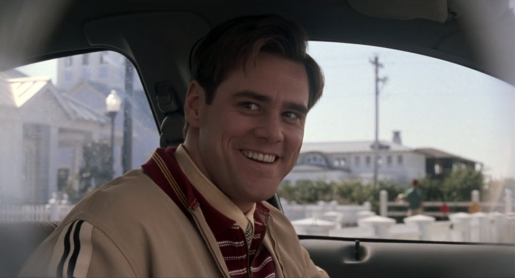
With his rubber face, manic charm and boundless energy, Jim Carrey leapt onto the stage as a stand-up comic as a master of impersonations. After years working in Hollywood, he scored a standout role in the timeless sketch comedy show “In Living Color”, and then he finally broke out as the king of comedy on his own polarizing, yet outlandish terms starring in one box-office hit after another until he was the most popular and highest paid actor in the movie industry. And this man grew up poor when he was young — his family lived in their Volkswagen bus for a time.
Even Lisa Simpson has high praise, “He can make you laugh with no more than a frantic flailing of his limbs.”
As boy growing up in the 90s and falling in love with the movies, I adored Jim Carrey. Watching “Ace Ventura: When Nature Calls” and laughing non-stop in a packed house at the Station Square Cinemas remains a treasured experience. I watched his comedies so often I had them memorized. One of my favourite pastimes was performing along with Jim Carrey, just the two of us, sharing the thrill of acting and getting the mimicry down cold. My mother threatened to confiscate my VHS of “Batman Forever”, I was so into it. Ah, “Joygasm…” I would also give my heartfelt thanks to the filmmaker Chuck Russell who passed away last July for making “The Mask,” which was a real childhood favourite and more than holds up as a classic comedy that would have been an ideal summer 90s movie to screen here.
So having starred in the poorly-received, yet now acclaimed dark comedy “The Cable Guy” where Carrey played a man who forced everyone to conform to the laws of television, there was strange justice in Carrey’s following performance, his first dramatic one, where he played a man struggling to break free of TV life. Jim Carrey is so incredible playing Truman that his disappointment was understandable when he took to the Oscar stage to proclaim that the Academy slighted him for “ROBERTO BENIGNI!” But then Jim Carrey consoled himself “Winning the Oscar’s not the most important thing in the world. It’s an honour to be no— OH GAWD!!!”
I believe “The Truman Show” is comparable in place and stature with the 1970s films “Network” (1976) and “The Conversation” (1974), as well as the 1985 capitalist satire “Brazil”. These three select films form a unholy trinity that reformats the Marshall McLuhan quote to, “The Medium is Your Paranoia”.
The ordeal of Truman Burbank speaks to our anxieties about free will. What choices can we call our own? Are our lives really ours to create or are they a foregone conclusion? Are we just for show on display with the factory settings put in place? And to whose benefit is that?
Where does The Show end and the soul begin?
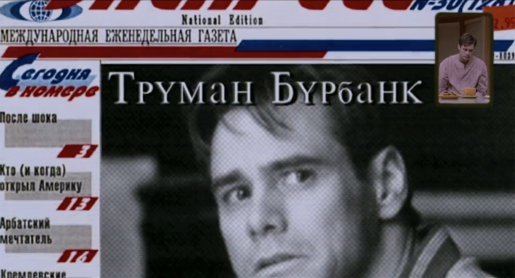
In his review, Roger Ebert wrote, “Television, with its insatiable hunger for material, has made celebrities into quote-unquote “content,” devouring their lives and secrets.” Adding salt to this wound, the starry eyed psycho-narcissist Suzanne Stone (That’s her professional name!) in “To Die For” (1995) says, “You’re not anybody in America unless you’re on TV.”
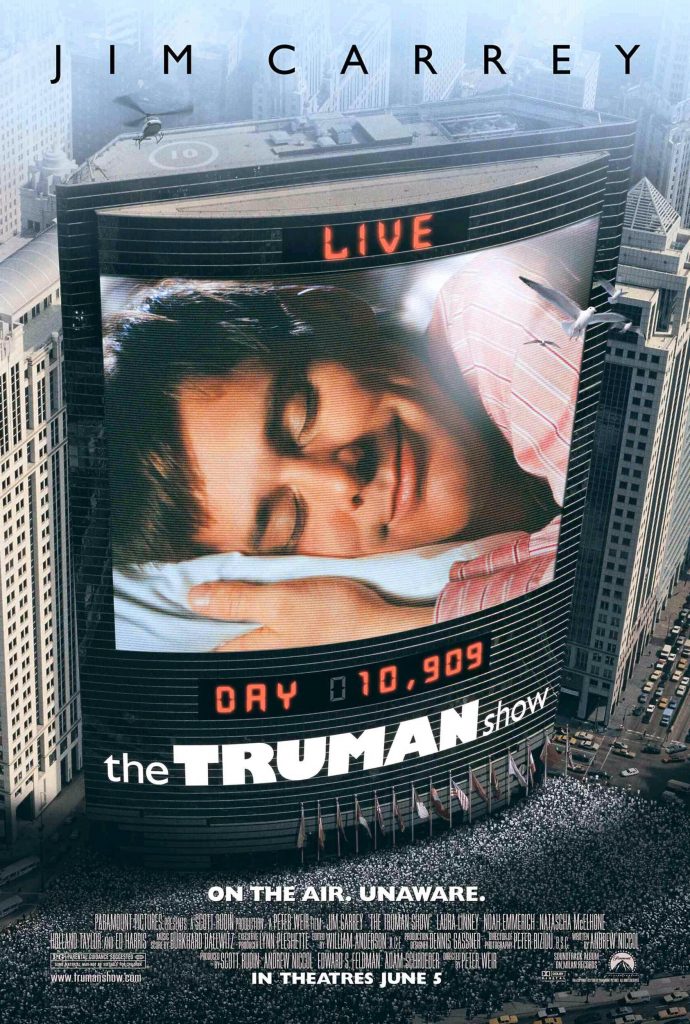
Released on June 5th, 1998, “The Truman Show” was setting on the horizon line at the end of the millennium where the 21st century was a total mystery, albeit with glimmers of hope. Twenty-eight years ago, Truman’s situation was pure fantasy. Back in the 90s, it was rare for a regular person to see themselves on public television, much less placed under surveillance. It was such a novel event just to catch yourself on a live camcorder display in Sears that you’d be tempted to stop and pose before the TV screen.
With a premise worthy of iconic “Twilight Zone” episodes like “Number Twelve Looks Just Like You” and “It’s a Good Life,” “The Truman Show” invites you into “another dimension not only of sight and sound, but of mind.” Where lifetime is no different than air time. Consider for a moment how much the titles “The Truman Show” and “The Twilight Zone” have in common with their lettering, structure and creep-inducing semblance. Instead of Rod Serling, we have the Show’s omnipresent creator, Christof, played by Ed Harris in an Academy Award nominated performance. What a chilling and complex supervillain he plays!
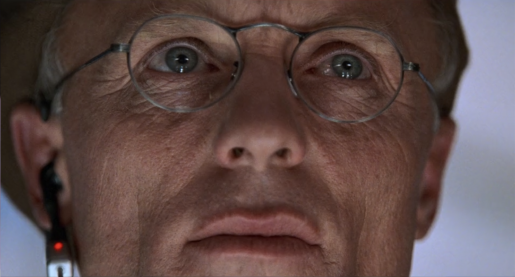
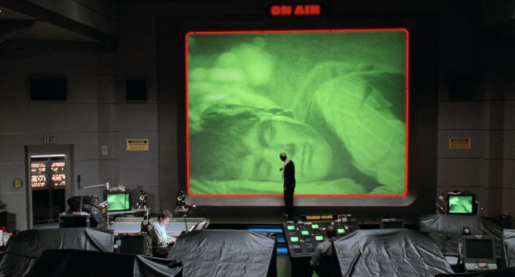
With the advent of “reality television” clogging up prime time in the 2000s, people were in awe over how prescient “The Truman Show” became. However, I was anticipating even worst things were brewing that The Show had presented as “Coming Closer and Closer To You.” In the past several years, the most potent horrors of The Show were becoming real at a frightening pace and that was just the trial run. I am confident that you will find a ton of similarities with the ways our world, newer technology and the simulacrum is tightening its grip on us.
We are so dangerously close to having every future newborn wake up in a world much like the one Truman was born into. And so we are most in need of the heroism, the courage, the ingenuity, the wit, the hyper-vigilance and the determination for the truth and true love that Truman Burbank possesses.
“To strive, to seek, to find, and not to yield.”
The show must go on. Thank you.

© 2008 – 2026, CINELATION | Movie Reviews by Chris Beaubien. All rights reserved.