









Movie Review: THE DARK KNIGHT (2008)

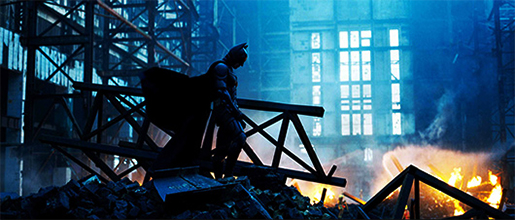
Gotham’s Finest! Consequently, also its bleakest.
I wept throughout the last two minutes of The Dark Knight and applauded rapturously throughout the end credits. This is the Batman movie I have been waited for ever since I discovered the Batman comics at the age of five. It is unrelentingly grim; however, it is also very optimistic because the power of good, slight as it is, glows against the darkness. When hopelessness engulfs its victims, true heroism at its most intangible and mysterious can shine in the corridors of the heart. Here, sacrifice is the key to combat such harrowing evil. I love exhilarating tragedies. This film has a prominent place on my list of the best films of the decade alongside the Dardenne Brother’s Le Fils (2003), Paul Thomas Anderson’s There Will Be Blood (2007), Nicole Holofcener’s Lovely and Amazing (2002), Guillermo del Toro’s Pan’s Labyrinth (2006) and Mike Nicols’ Wit (2001). I love this movie so much that, despite the obvious legalities attached to this proposition, I want to ask Christopher Nolan’s permission to marry his movie.
In terms of on-screen performances, I’d like to do something rather radical, and focus on the work of Aaron Eckhart as Harvey Dent first. My first confrontation with Eckart was as Chad, the all-too-credible venomous charmer in Neil Labute’s In The Company of Men (1997). In that film, Chad persuades his pal Howard (Matt Malloy), an earnest lemming, while on their business venture out of town to play a cruel joke on a pretty, deaf woman (Stacy Edwards). It was a small masterpiece about how a sterile, corporate environment breeds nihilistic alpha males, nebbishes and their victims. Eckhart’s work was phenomenal in depicting misanthropy with such unnerving — in the worst sense of the word — humanity. This was a character actor to watch out for.
Throughout the last ten years, I’ve seen him shine in the corners of Your Friends and Neighbors (1998), Nurse Betty (2000), The Pledge (2001), and Conversations with Other Women (2005). Finally, Jason Reitman cast Eckhart as an earnest tobacco lobbyist in Thank You For Smoking (2005), which launched him into the mainstream as a leading man who could dive in the taboo stream (“It is in our best interest to keep Robin (Cancer Boy) alive and smoking!”) and retain his likability – he could smile his way through manslaughter if he wanted.
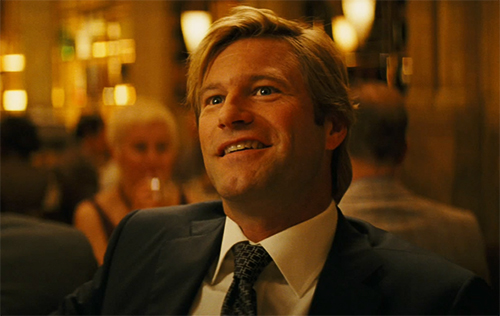 As Gotham City’s new White Knight, District Attorney Harvey Dent, Eckhart has finally delivered an astonishing performance in a mainstream blockbuster. Eckhart is so good that he deserves nomination talk along with Heath Ledger, who I will write about later. Throughout the first half of the picture, Eckhart is perfect as the passionate, though moody D.A. with his brooding forehead and easy smile. So eager to hang up the cape, Batman (Christian Bale) looks to Dent as a fearless crusader, his equal minus the mask, who could take down the mob and return Gotham to form. They both give one another strength like yin and yang: “You can’t quit!” Dent is a man who would rather face on powerful criminals in court (“I haven’t finished question him, your honor!”) than hobnob alone with stuck-up socialites at his re-election fund raiser. He simply prefers to make his own fate.
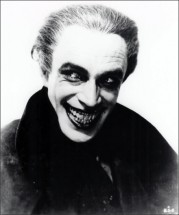
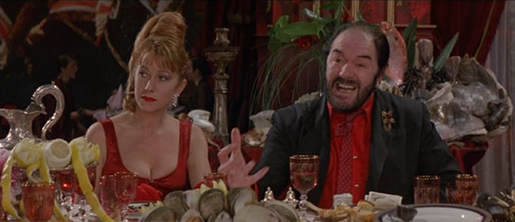
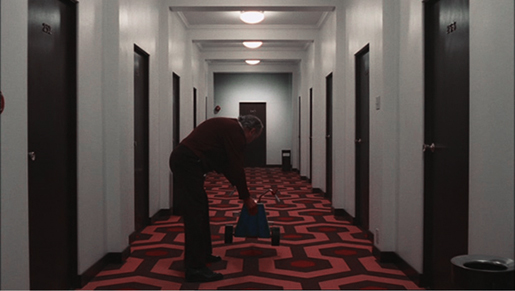
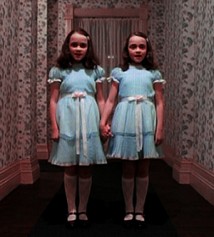 The attention to detail is absolutely terrific from the recreated sets that look exactly like the original Overlook Hotel corridors and hedge maze from thirty years ago to the lighting and lens choice — a 25mm Cooke lens that was favored by Kubrick. The amount of visual in-jokes will have die-hard Shining enthusiasts viewing it several times before none have escaped their close attention. I marvel at the prospect that the filmmakers even cast Kubrick’s crew to look like the real-life counterparts including John Alcott, Kubrick’s longtime director of production before his death in 1986. Watch out carefully for a half-dozen dead ringers of The Shining’s most prominent characters. Oh, and the tricycle that appears at the end is the real deal. This is the type of work ethic that makes me beam with joy.
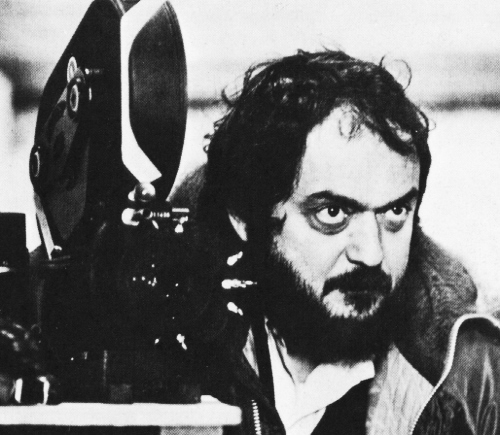 Citizen Kubrick, a new documentary by Jon Ronson will first head off ten of the selected movies from Kubrick’s generous filmography. The chosen films range from the most famous (Lolita, 1962; 2001: A Space Odyssey, 1968; Barry Lyndon, 1975) to the most obscure (Killer’s Kiss, 1955; The Killing, 1956). After watching the documentary Stanley Kubrick: A Life in Pictures (2001) by Jan Harlan, one of Kubrick’s closest producers, I’m still very curious about the secretive genius. I am also relishing the published